Image Of The day

See the newest image from scientist ultra advanced device

Planck Image Of The Early Universe

The color-coded image is effectively a photograph of the universe when it was only 379 000 y old,which was about 13.7 billion years ago. An amazing picture from the universe

Two colliding galaxies

The colliding galaxies NGC 4676 leave a trail of stars, this image was taken by Hubble Space Telescope

Earth seen from Appllo Moon landing mision

Space Exploration in the middle 20th century increasing human knowledge to new era science

CERN Large Hadron Collider tunnel

Huge particle smasher, like LHC is a gigantic and complex engineering marvel that disigned to detect particles at extreme energies

Hubble Space telescope seen from last service

Multi billion dollar device like HST can brings very deep image from the heart of the universe

Thursday, November 10, 2011

LHC results put supersymmetry theory 'on the spot'


Results from the Large Hadron Collider (LHC) have all but killed the simplest version of an enticing theory of sub-atomic physics.

Researchers failed to find evidence of so-called "supersymmetric" particles, which many physicists had hoped would plug holes in the current theory.

Theorists working in the field have told BBC News that they may have to come up with a completely new idea.

Data were presented at the Lepton Photon science meeting in Mumbai.

They come from the LHC Beauty (LHCb) experiment, one of the four main detectors situated around the collider ring at the European Organisation for Nuclear Research (Cern) on the Swiss-French border.

According to Dr Tara Shears of Liverpool University, a spokesman for the LHCb experiment: "It does rather put supersymmetry on the spot".
Continue reading the main story
“Start Quote

    There's a certain amount of worry that's creeping into our discussions”

End Quote Dr Joseph Lykken Fermilab

The experiment looked at the decay of particles called "B-mesons" in hitherto unprecedented detail.

If supersymmetric particles exist, B-mesons ought to decay far more often than if they do not exist.

There also ought to be a greater difference in the way matter and antimatter versions of these particles decay.

The results had been eagerly awaited following hints from earlier results, most notably from the Tevatron particle accelerator in the US, that the decay of B-mesons was influenced by supersymmetric particles.

LHCb's more detailed analysis however has failed to find this effect.
Bitten the dust

This failure to find indirect evidence of supersymmetry, coupled with the fact that two of the collider's other main experiments have not yet detected supersymmetic particles, means that the simplest version of the theory has in effect bitten the dust.
Lead ion collisions Collisions inside the LHC should have found some evidence of Supersymmetry by now

The theory of supersymmetry in its simplest form is that as well as the subatomic particles we know about, there are "super-particles" that are similar, but have slightly different characteristics.

The theory, which was developed 20 years ago, can help to explain why there is more material in the Universe than we can detect - so-called "dark matter".

According to Professor Jordan Nash of Imperial College London, who is working on one of the LHC's experiments, researchers could have seen some evidence of supersymmetry by now.

"The fact that we haven't seen any evidence of it tells us that either our understanding of it is incomplete, or it's a little different to what we thought - or maybe it doesn't exist at all," he said.
Disappointed

The timing of the announcement could not be worse for advocates of supersymmetry, who begin their annual international meeting at Fermilab, near Chicago, this weekend.
Continue reading the main story
“Start Quote

    Supersymmetry... has got symmetry and its super - but there's no experimental data to say it is correct”

End Quote Professor George Smoot Nobel Laureate

Dr Joseph Lykken of Fermilab, who is among the conference organisers, says he and others working in the field are "disappointed" by the results - or rather, the lack of them.

"There's a certain amount of worry that's creeping into our discussions," he told BBC News.

The worry is that the basic idea of supersymmetry might be wrong.

"It's a beautiful idea. It explains dark matter, it explains the Higgs boson, it explains some aspects of cosmology; but that doesn't mean it's right.

"It could be that this whole framework has some fundamental flaws and we have to start over again and figure out a new direction," he said.
Down the drain

Experimental physicists working at the LHC, such as Professor Nash, say the results are forcing their theoretical colleagues to think again.

"For the last 20 years or so, theorists have been a step ahead in that they've had ideas and said 'now you need to go and look for it'.

"Now we've done that, and they need to go scratch their heads," he said.

That is not to say that it is all over for supersymmetry. There are many other, albeit more complex, versions of the theory that have not been ruled out by the LHC results.

These more complex versions suggest that super-particles might be harder to find and could take years to detect.

Some old ideas that emerged around the same time as supersymmetry are being resurrected now there is a prospect that supersymmetry may be on the wane.

One has the whimsical name of "Technicolor".

According to Dr Lykken, some younger theoretical physicists are beginning to develop completely novel ideas because they believe supersymmetry to be "old hat" .

"Young theorists especially would love to see supersymmetry go down the drain, because it means that the real thing is something they could invent - not something that was invented by the older generation," he said.

And the new generation has the backing of an old hand - Professor George Smoot, Nobel prizewinner for his work on the cosmic microwave background and one of the world's most respected physicists.

"Supersymmetry is an extremely beautiful model," he said.

"It's got symmetry, it's super and it's been taught in Europe for decades as the correct model because it is so beautiful; but there's no experimental data to say that it is correct."


Speed-of-light results under scrutiny at Cern

 By Jason Palmer  Science and technology reporter, BBC News
Opera detector Enormous underground detectors are needed to catch neutrinos, that are so elusive as to be dubbed "ghost particles"
Continue reading the main story
Related Stories

    * Does it mean time travel possible?
    * Particle 'flips to all flavours'
    * Light-speed trick in stock trades

A meeting at Cern, the world's largest physics lab, has addressed results that suggest subatomic particles have gone faster than the speed of light.

The team has published its work so other scientists can determine if the approach contains any mistakes.

If it does not, one of the pillars of modern science may come tumbling down.

Antonio Ereditato added "words of caution" to his Cern presentation because of the "potentially great impact on physics" of the result.

The speed of light is widely held to be the Universe's ultimate speed limit, and much of modern physics - as laid out in part by Albert Einstein in his theory of special relativity - depends on the idea that nothing can exceed it.
Continue reading the main story
“Start Quote

    We want to be helped by the community in understanding our crazy result - because it is crazy”

End Quote Antonio Ereditato Opera collaboration

    * Light speed: Flying into fantasy

Thousands of experiments have been undertaken to measure it ever more precisely, and no result has ever spotted a particle breaking the limit.

"We tried to find all possible explanations for this," the report's author Antonio Ereditato of the Opera collaboration told BBC News on Thursday evening.

"We wanted to find a mistake - trivial mistakes, more complicated mistakes, or nasty effects - and we didn't.

"When you don't find anything, then you say 'well, now I'm forced to go out and ask the community to scrutinise this'."

Friday's meeting was designed to begin this process, with hopes that other scientists will find inconsistencies in the measurements and, hopefully, repeat the experiment elsewhere.

"Despite the large [statistical] significance of this measurement that you have seen and the stability of the analysis, since it has a potentially great impact on physics, this motivates the continuation of our studies in order to find still-unknown systematic effects," Dr Ereditato told the meeting.

"We look forward to independent measurement from other experiments."
Graphic of the Opera experiment

Neutrinos come in a number of types, and have recently been seen to switch spontaneously from one type to another.

The Cern team prepares a beam of just one type, muon neutrinos, and sends them through the Earth to an underground laboratory at Gran Sasso in Italy to see how many show up as a different type, tau neutrinos.

In the course of doing the experiments, the researchers noticed that the particles showed up 60 billionths of a second earlier than they would have done if they had travelled at the speed of light.

This is a tiny fractional change - just 20 parts in a million - but one that occurs consistently.

The team measured the travel times of neutrino bunches some 16,000 times, and have reached a level of statistical significance that in scientific circles would count as a formal discovery.

But the group understands that what are known as "systematic errors" could easily make an erroneous result look like a breaking of the ultimate speed limit.

That has motivated them to publish their measurements.

"My dream would be that another, independent experiment finds the same thing - then I would be relieved," Dr Ereditato told BBC News.

But for now, he explained, "we are not claiming things, we want just to be helped by the community in understanding our crazy result - because it is crazy".

NASA readies launch of 'dream machine' to Mars

By Kerry Sheridan | AFP
The US space agency is getting ready to launch later this month the biggest, most expensive robotic vehicle ever built to explore Mars for signs of previous life there, NASA said Thursday.
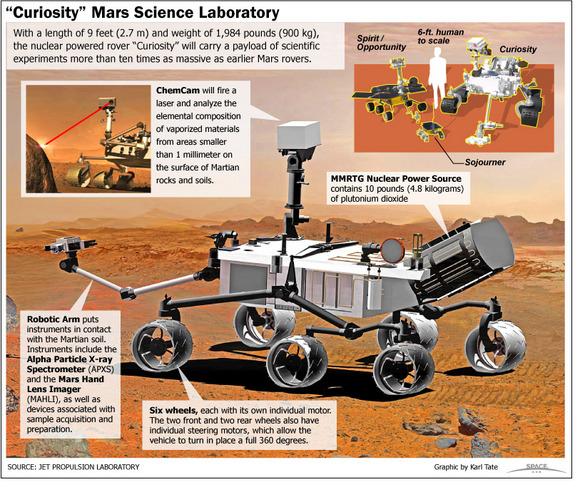
The Curiosity rover, known formally as the Mars Science Laboratory (MSL), is a $2.5 billion state-of-the-art vehicle equipped with video cameras and a sophisticated mobile tool kit for analyzing rocks and soil on the red planet.
The launch of the 1,982-pound (899-kilogram) rover is set for November 25 at 10:21 am (1521 GMT) from Cape Canaveral Air Force Station in Florida.
"This is a Mars scientist's dream machine," said Ashwin Vasavada, MSL deputy project scientist at NASA's Jet Propulsion Laboratory.
"This is the most capable scientific explorer we have ever sent out... We are super excited."
The rover will explore the Gale Crater on Mars, just south of that planet's equator, where a range of soils exist and a small mountain gives the rover a chance to climb and analyze samples at different heights.
But first it faces a long, 354-million-mile (570-million-kilometer) journey to get there, taking about eight and a half months before landing in August 2012.
The landing itself is set to be a spectacular affair. A ravioli-shaped capsule will open to expose the rover suspended by a "rocket backpack" that will fire its engines to lower the MSL to the ground.
The rover's six wheels and suspension system should "pop into place just before touchdown," NASA said. Then, the machine goes into "surface mode," using a series of cameras and a long robotic arm to investigate the Martian terrain.
"It is not your father's rover," said Doug McCuistion, director of the Mars Program at NASA headquarters in Washington, describing it as "truly a wonder in engineering... the best of US imagination, the best of US innovation."
NASA sees the latest rover as a midway point in a long journey of Mars exploration that began with the landing of the Viking spacecraft in 1976 and may culminate with a human mission there in the 2030s.
The venture is not meant to hunt for life on Mars, but rather for signs that it once may have existed there.
Any clues it can send back about the habitability of Earth's neighbor, the fourth planet from the Sun, and about the radiation levels there will be important to NASA as it devises future exploration missions.
"This mission has the purpose of setting us up for an eventual life detection mission," said Vasavada. "The goal of this mission is to look for habitable environments on Mars."
The landing site was announced in July, a day after the space shuttle Atlantis returned to Earth from its final mission to the International Space Station, marking the formal end of the 30-year US shuttle era.
The project is meant to last two years, but NASA hopes that like some of its other rovers in the past, Curiosity will outlive its expected potential.
The rover has such advanced instruments that scientists expect it will return much more data than any other to date.
"Viking did the best it could, but it could only see a couple of samples. MSL is going to look at tons of samples," said Pamela Conrad, deputy principal investigator of sample analysis at Mars.
Her experiment, a set of three spectrometers, is "designed to not only sniff the atmosphere and look for volatile species but to evolve gases from solid samples and then sniff those gases that come out," she said.
"Mars very easily could have produced life. Mars could very easily have evolved the complex chemistry that is necessary to be a habitable environment. And that information is still on Mars."
Of course, those involved in the launch have some jitters over the mission too because it is so complicated.
Russia's failure this week to get its pioneering Mars probe off on the right course also serves as a grim reminder of the dangers involved.
The unmanned Phobos-Grunt spacecraft lost its course to Mars and is stuck in low-Earth orbit, threatening to crash within days.
"The thing at the top of my concern list is what I don't know," said MSL project manager Pete Theisinger. "These things are very complicated, you test the heck out of them, but you can't test all their interactions."

First Stars in Universe Weren't Giants, Astronomers Say


By  SPACE.com Staff
Space.com | SPACE.com – 11 hrs ago


 The first stars that were forged in our early universe were not nearly as massive as once thought, according to the results of a new study.

Astronomers at NASA's Jet Propulsion Laboratory in Pasadena, Calif., used computer simulations to artificially create the conditions of the early universe to "grow" stars during this primordial stage. The simulations, which took weeks, yielded shocking results: the full-grown stars were not the behemoths that the researchers were expecting.

"The first stars were definitely massive, but not to the extreme we thought before," study leader Takashi Hosokawa, an astronomer at JPL, said in a statement. "Our simulations reveal that the growth of these stars is stunted earlier than expected, resulting in smaller, final sizes."

Previously, it was widely thought that the first stars were the biggest of all, hundreds of times more massive than our sun. Instead, the new findings show that these early stars are only tens of times the mass of the sun. In fact, one star from the researchers' simulations was only 43 times the mass of our sun.

Details of the study will be published online in tomorrow's (Nov. 11) issue of the journal Science.

Conditions of the primordial universe

The early universe consisted of only thin clouds of hydrogen and helium atoms. It would take several hundred million years for the first stars to form. But how these stars ignited is still a mystery.

Astronomers know that collapsing clouds of gas trigger star formation, and the gravity at the center of the cloud attracts more and more matter. Typically, for stars like our sun, this formation process is facilitated by heavier chemical elements, like carbon, which help to keep the gas falling onto the budding star cool enough to collapse, the researchers explained. If, on the other hand, the gas cloud gets too hot, the gas will expand and escape. [Top 10 Star Mysteries]

Heavier elements were created and dispersed throughout the universe as stars were formed, but in the primordial universe, these heavy elements had yet to be produced. So, the very first stars had to have been formed out of nothing but hydrogen and helium, the researchers said.

As a result, scientists theorized that the first stars would need even more mass to form, in order to compensate for the lack of heavy elements and their cooling power. It was first thought that the stars could be as big as1,000 times the mass of our sun, but these models were later refined, and the commonly accepted estimate was that these early stars were hundreds of solar masses, the researchers said.

"These stars keep getting smaller and smaller over time," Takashi said. "Now we think they are even less massive, only tens of solar masses."

Growth in the early universe

The new simulations show that matter surrounding the new stars heats up to scorching temperatures as high as 90,000 degrees Fahrenheit (almost 50,000 degrees Celsius) — hotter than previously thought.

At these temperatures, which are 8.5 times hotter than the surface temperature of the sun, gas expands and escapes the gravity of the developing star, instead of falling back down onto it. This means that the growth of these stars is stunted earlier than predicted, which could explain why they appear to be smaller.

"This is definitely going to surprise some folks," Harold Yorke, an astronomer at JPL and a co-author of the new study. "It was standard knowledge until now that the first stars had to be extremely massive."

The findings also shed some light on the mystery of the first stellar explosions, called supernovas. When massive stars run out of nuclear fuel, they end their lives in violent supernova explosions that emit brilliant light and spew star guts made of heavier elements into space.

If the first stars were indeed as monstrous as thought, these supernovas should have left a specific pattern of these heavy elements imprinted on the material of the following generation of stars, which were built from the ashes expelled from the first supernovas. But, as much as astronomers searched the oldest stars for this pattern, they could not find it.

The results of this new study suggest that the signature is simply not there, the researchers said. Since the first stars were not quite as massive as previously thought, they would have blown up in a manner similar to the types of supernova explosions we see today.

"I am sure there are more surprises in store for us regarding this exciting period of the universe," Yorke said. "NASA's upcoming James Webb Space Telescope will be a valuable tool to observe this epoch of early star and galaxy formation."

New Galery

Inside and Out: The International Space Station

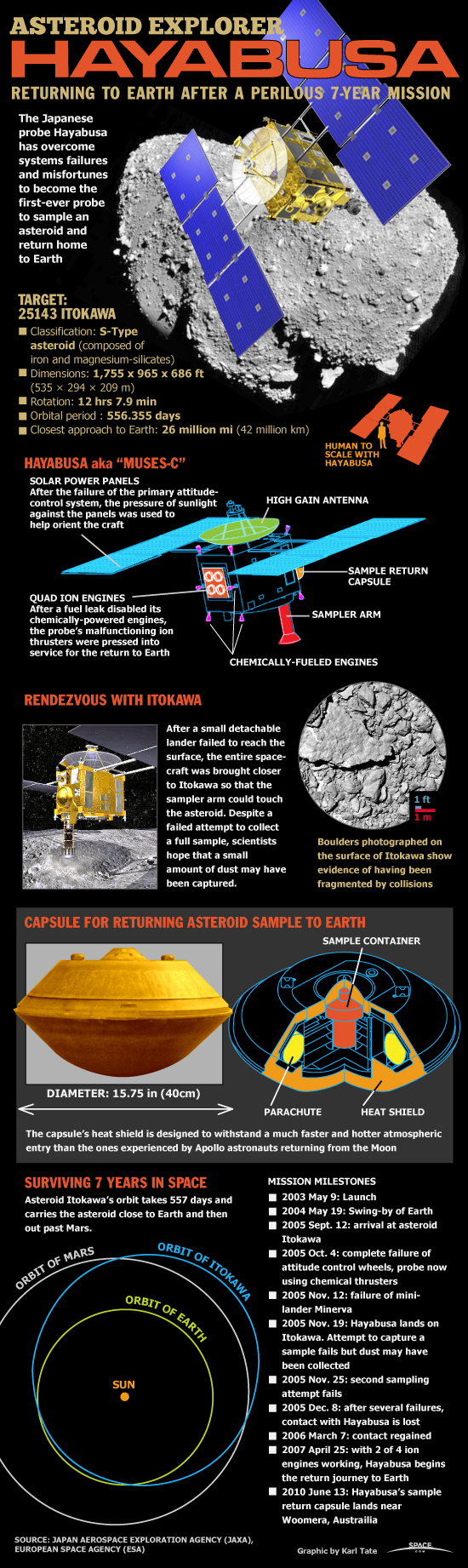
How Japan's Hayabusa Asteroid Mission Worked

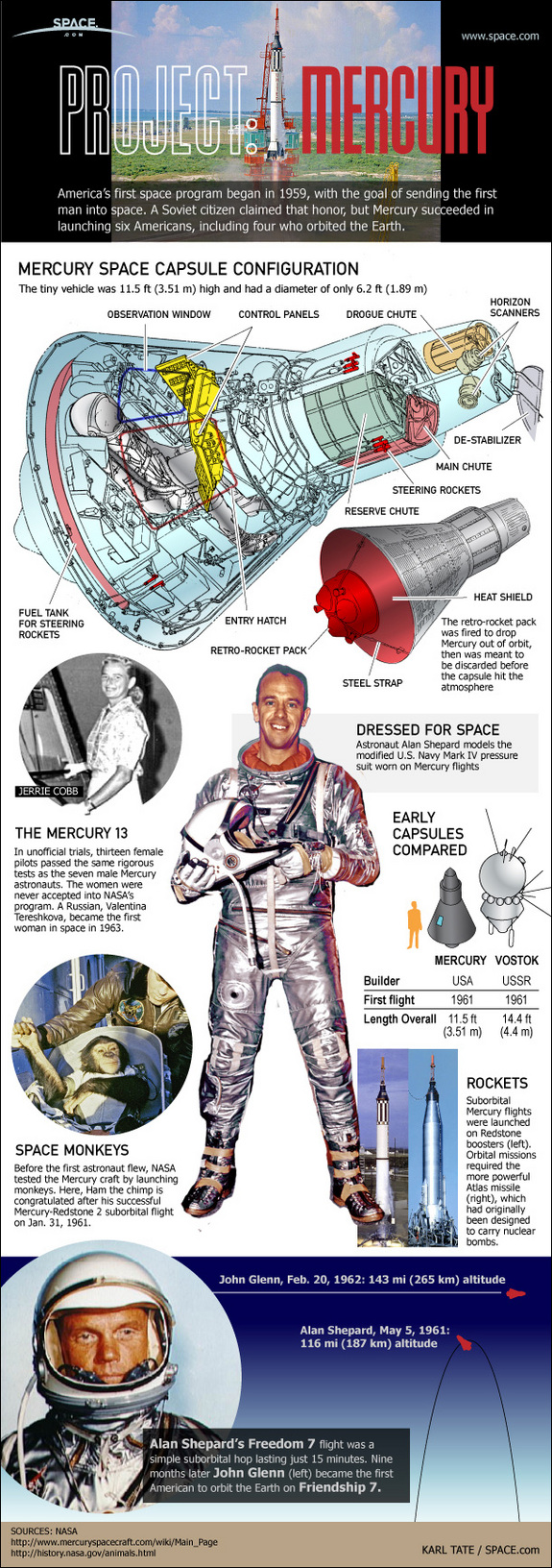
America's First Spaceship: Project Mercury

IMAX Hubble 3-D How it Works

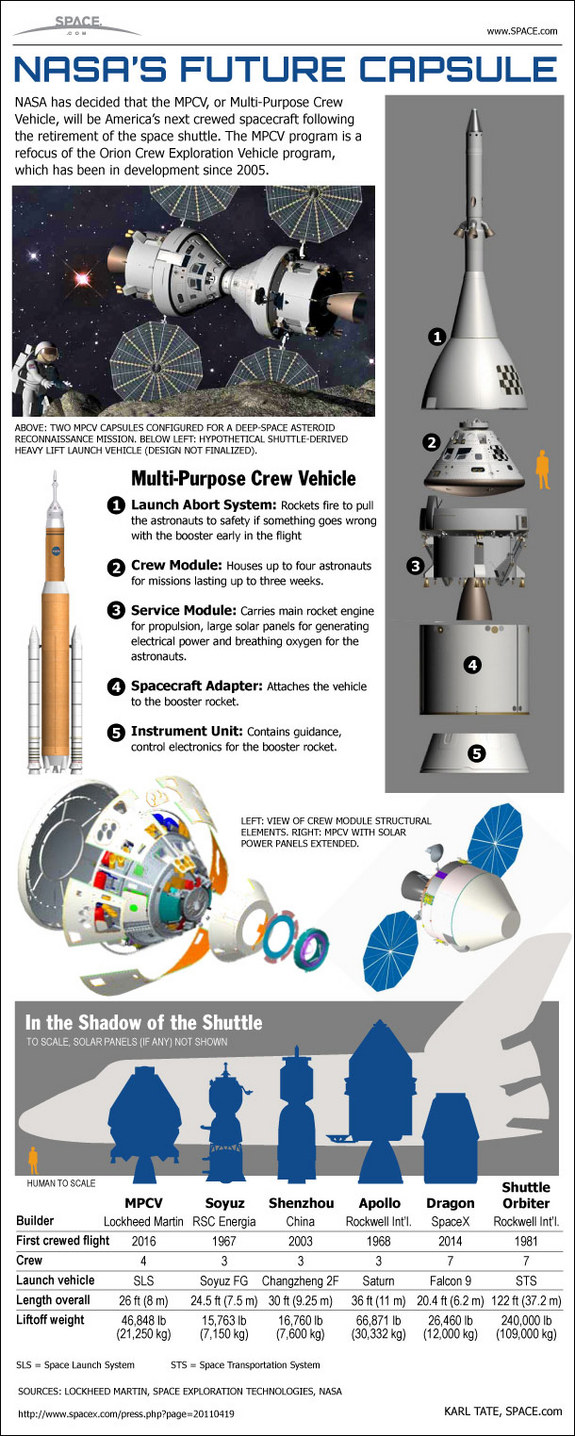
How NASA's Multi-Purpose Crew Vehicle Stacks Up

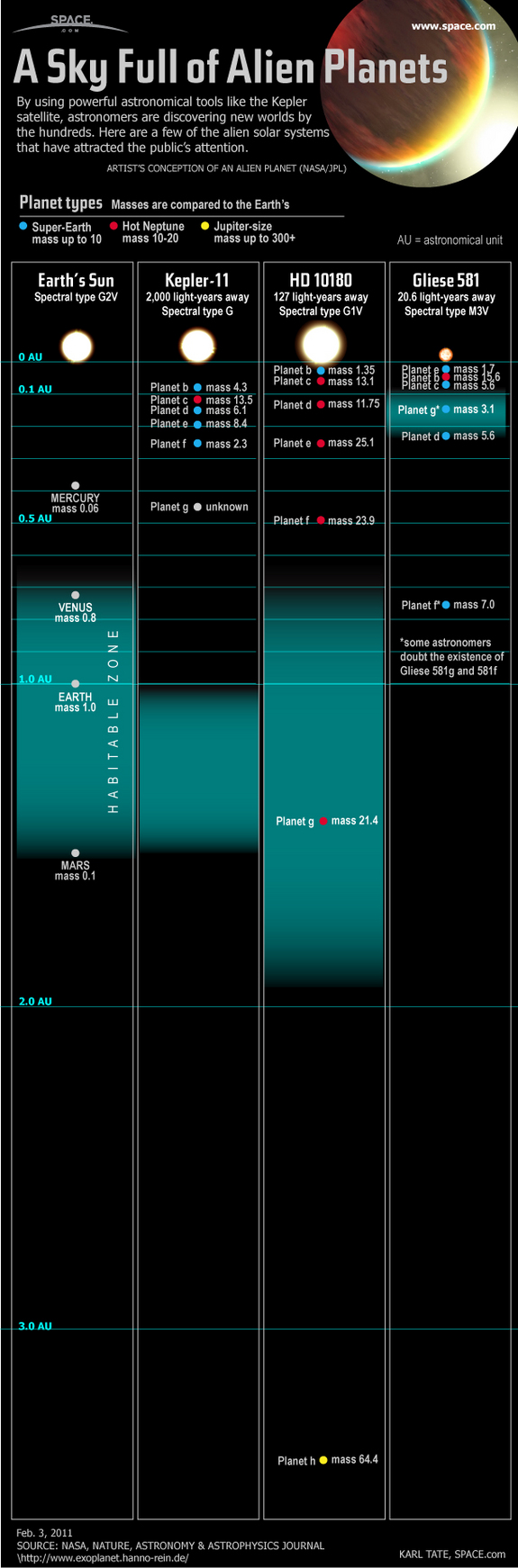
How Planets in Alien Solar Systems Stack Up

ISS Space Station Cooling System Malfunction

<a href="http://www.space.com/49-iss-space-station-cooling-system-malfunction.html"> <img src="http://www.space.com/images/i/365/i02/iss-cooling-pump-100802b.jpg?1289493306" alt="A short circuit in a vital cooling system pump on the International Space Station has set the stage for two emergency spacewalks to replace the faulty component." width="575" border="1"/></a><br /> Source <a href="http://www.space.com">Space.com: All about our solar system, outer space and exploration</a>

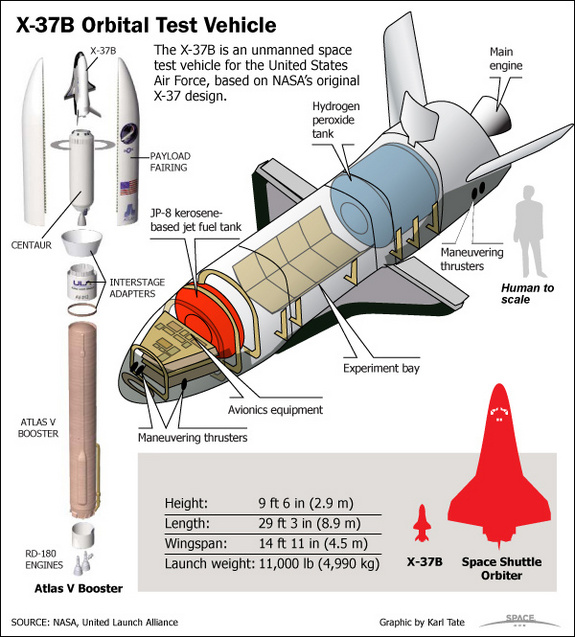
X-37B Space Plane

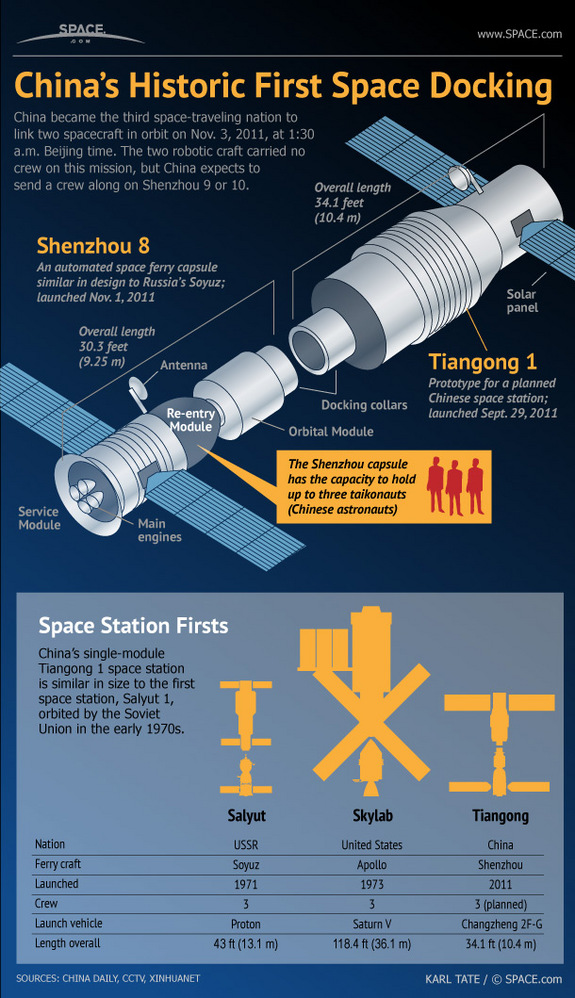
Inside China's Space Rendezvous Success

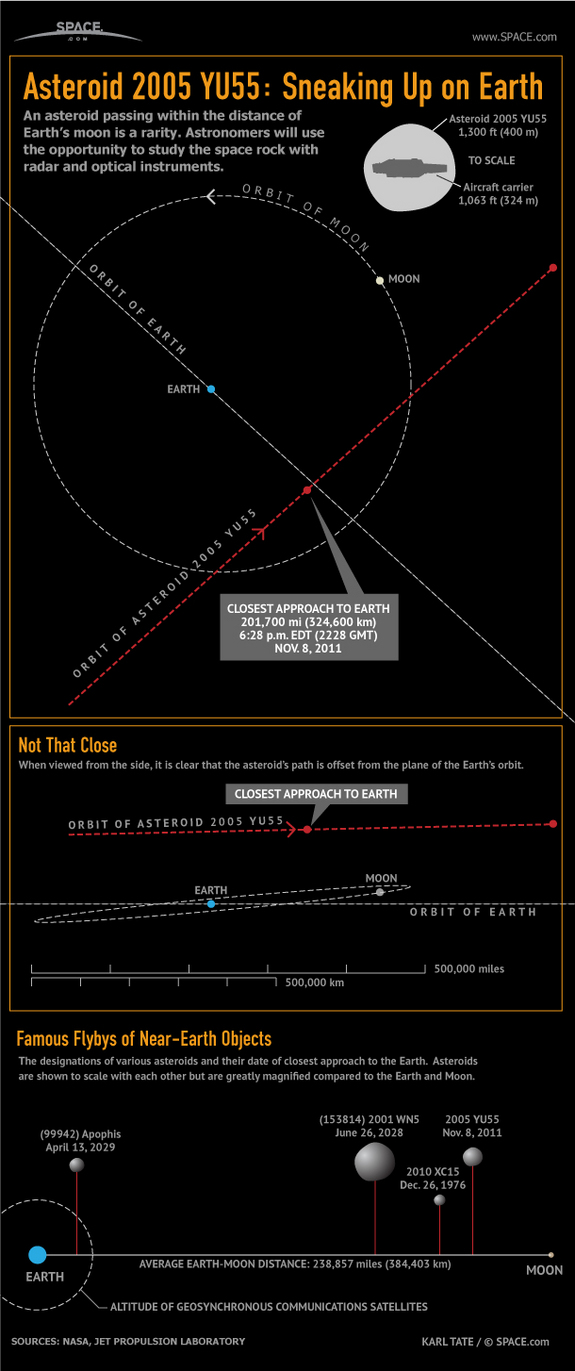
Huge Space Rock 2005 YU55 Sneaks Within Moon's Distance

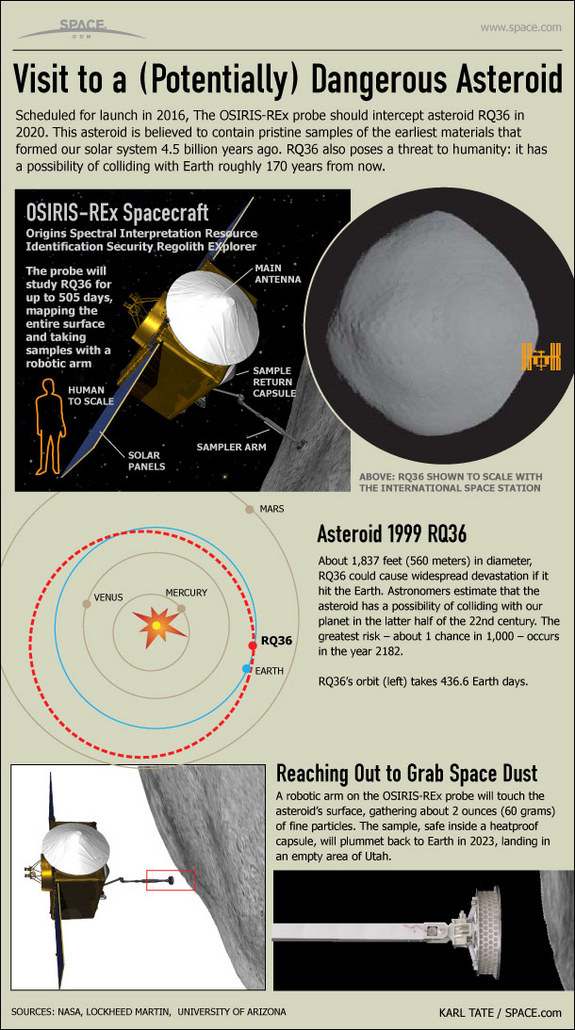
How NASA's Asteroid Sample Return Mission Will Work

How the Mars Science Laboratory Curiosity Works

Inside Russia's Mars Moon Sampling Mission

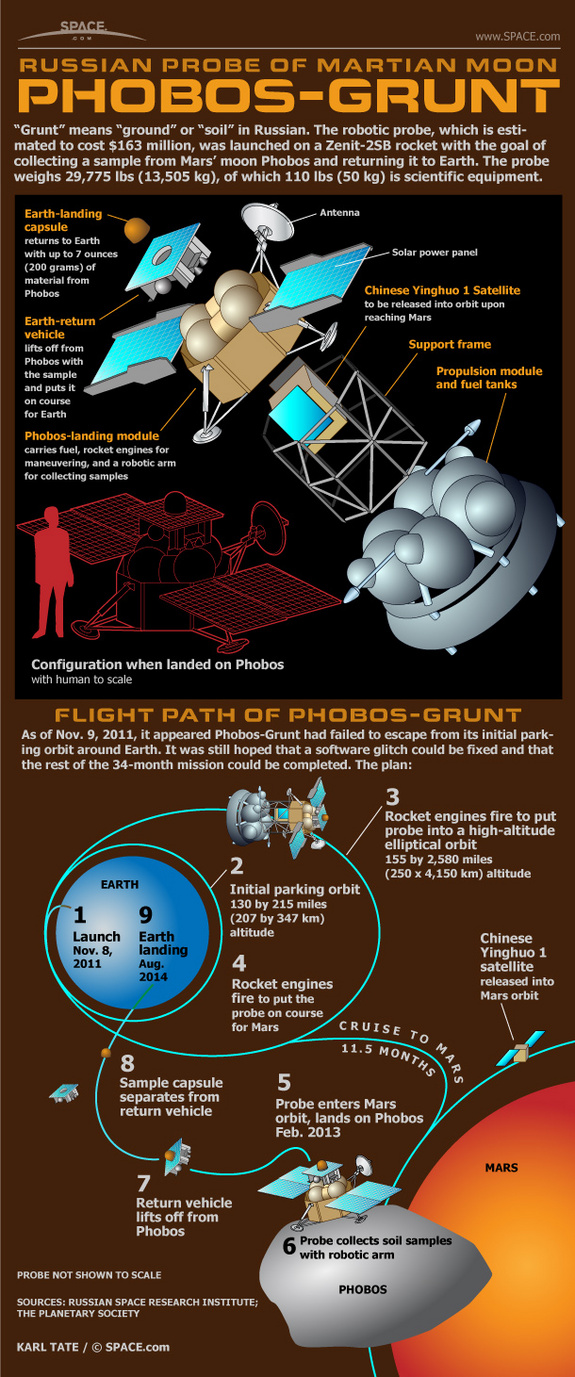
Learn about Russia's Phobos-Grunt soil sampling probe in this SPACE.com infographic.
Source: SPACE.com: All about our solar system, outer space and exploration
The Phobos-Grunt spacecraft launched from Baikonur Cosmodrome in Kazakhstan at 3:16 p.m. EST (2016 GMT) on Nov. 8, 2011, and separated from its Zenit rocket properly, Russian officials said. However, the spacecraft's own engine failed to ignite to take the vehicle on a trajectory to Mars, leaving it stranded in Earth orbit.

The World's Tallest Rockets: How They Stack Up

Date: 14 September 2011 Time: 09:31 AM ET
Throughout the history of human spaceflight, NASA and other space agencies have built some serious rockets: behemoths of space that aimed to send astronauts to the moon, Mars or elsewhere in deep space. Take a look at some of the tallest rockets in history, and NASA's latest entry: the Space Launch System to fly in 2017.

NASA's Mighty Saturn 5
The reigning champion of giant rockets is NASA's massive Saturn 5, a three-stage booster used to launch American astronauts to the moon in the late 1960s and early 1970s. Like the Ares I-X and NASA shuttles, the towering Saturn V launched from the Kennedy Space Center in Florida. It stood 363 feet (110 meters) high and remains the most powerful rocket ever built, even though the last one flew in 1973.
The rocket could launch payloads of up to 45 tons to the moon, or 120 tons into Earth orbit. It weighed 6.5 million pounds (3 million kg) fully fueled at liftoff. The Ares I-X weighs 1.8 million pounds (816,466 kg), slightly less than the full Ares I rocket.
That last Saturn V was a modified version that launched NASA's Skylab space station. Smaller versions of the Saturn rocket were used to launch astronauts to Skylab, with the last one — a 224-foot (68-meter) Saturn 1B — launching in 1975 to fly Apollo astronauts to meet a Soviet Soyuz spacecraft during the Apollo-Soyuz joint mission.

Ill-fated N-1
A close second in the giant rocket race is the former Soviet Union's N-1 rocket, an enormous booster designed to launch cosmonauts to the moon during the Space Race with the United States. The giant rocket stood nearly 345 feet (104 meters) tall, had five distinct stages and resembled a huge, tapering cone that was about 55 feet (17 meters) wide at the base. During launch, it weighed 6.1 million pounds (2.7 million kg) and was envisioned to launch payloads of up to 95 tons to space to send cosmonauts to the moon, according to the Russian space history website Russianspaceweb.com. [Infographic: Moscow's Secret Moon Plan - The N-1 Rocket]
But the N-1 rocket never successfully reached space, despite four attempted launches. It exploded during all four attempts between 1969 and 1972.
The former Soviet Union did have other hefty rockets in its space launch inventory: the enormous D-1E and D-1 variants of the Proton used for the 1968 lunar probe missions and 1971 Salyut 1 space station launch. Neither came close to the N-1's towering stature.
Today, Russia still uses Proton rockets and smaller Soyuz boosters to launch satellites into orbit, though cosmonauts continue to ride only Soyuz rockets into orbit. The country is also developing a new family of Angara rockets.


Russian scientists try to save Mars moon probe


MOSCOW (AP) — Russian scientists were racing against the clock Wednesday to find a way to fire the engines of an unmanned probe destined to collect surface samples from a moon of Mars, after a post-launch equipment failure left it stuck in Earth orbit.
The Phobos-Grunt (Phobos-Ground) craft was successfully launched by a Zenit-2 booster rocket at 12:16 a.m. Moscow time Wednesday (2016 GMT Tuesday) from the Russian-leased Baikonur cosmodrome in Kazakhstan. It separated from the booster about 11 minutes later and was to fire its engines twice to set out on its path to the Red Planet, but it never did.
Russia's Federal Space Agency chief Vladimir Popovkin said neither of the two engine burns worked, probably due to the failure of the craft's orientation system. He said in televised remarks that space engineers have three days to reset the craft's computer program to make it work before its batteries die.
James Oberg, a NASA veteran who now works as a space consultant, said that it's still possible to regain control over the probe.
"With several days of battery power, and with the probe's orbit slowly twisting out of the optimal alignment with the desired path towards Mars, the race is on to regain control, diagnose the potential computer code flaws, and send up emergency rocket engine control commands," Oberg said in an email to The Associated Press. "Depending on the actual root of the failure, this is not an impossible challenge."
He warned, however, that the effort to restore control over the probe is hampered by a limited earth-to-space communications network that forced Russian flight controllers to ask the general public in South America to help locate the craft. Amateur astronomers were the first to spot the trouble when they detected that the craft was stuck in Earth orbit.
The mishap is the latest in a series of recent launch failures that have raised concerns about the condition of Russia's space industries. The Russian space agency said it will establish its own quality inspection teams at rocket factories to tighten oversight over production quality.
The $170 million Phobos-Grunt was Russia's first interplanetary mission since a botched 1996 robotic mission to Mars, which failed when the probe crashed shortly after the launch due to an engine failure.
If the controllers fail to bring the Phobos-Grunt back to life, the tons of highly toxic fuel it carries would turn it into the most dangerous manmade object to fall from orbit, Oberg warned.
"About seven tons of nitrogen teroxide and hydrazine, which could freeze before ultimately entering, will make it the most toxic falling satellite ever," he said. "What was billed as the heaviest interplanetary probe ever may become one of the heaviest space derelicts to ever fall back to Earth out of control, an unenviable record."
The 13.2-metric ton (29,040-pound) craft was described by its makers as the heaviest interplanetary craft ever built, with fuel accounting for a large share of its weight. It was manufactured by the Moscow-based NPO Lavochkin that has specialized in interplanetary vehicles since the dawn of the space era.
The company designed the craft for the botched 1996 launch and the two probes sent to Phobos in 1988 also failed. One was lost a few months after the launch due to an operator's mistake, and contact was lost with its twin when it was orbiting Mars.
If space experts manage to fix the craft, it will reach Mars orbit in September 2012 and the landing on Phobos will happen in February. The return vehicle is expected to carry up to 200 grams (7 ounces) of dirt from Phobos back to Earth in August 2014.
It is arguably the most challenging unmanned interplanetary mission ever. It would require a long series of precision maneuvering for the probe to reach the potato-shaped moon measuring just about 20 kilometers (just over 12 miles) in diameter, land on its crater-dented surface, scrape it for samples and fly back.
Scientists hoped that studies of the Phobos surface could help solve the mystery of its origin and shed more light on the genesis of the solar system. Some believe that the crater-dented moon is an asteroid captured by Mars' gravity, while others think it's a piece of debris resulting from Mars' collision with another celestial object.
NPO Lavochkin's chief Viktor Khartov described the current mission as essential to maintain the nation's technological expertise in robotic missions to other planets.
"This is practically the last chance for the people who participated in the previous project to share their experience with the next generation, to preserve the continuity," Khartov said before the launch, according to the Interfax news agency.
China has contributed to the mission by adding a mini-satellite that is to be released when the craft enters an orbit around Mars on its way to Phobos. The 115-kilogram (250-pound) satellite, Yinghuo-1, will become the first Chinese spacecraft to explore Mars, studying the planet during two years in orbit.

NASA Test Fires Engine for Giant New Rocket

 
NASA successfully test-fired a key component of its next-generation heavy-lift rocket today (Nov. 9), putting through its paces a rocket engine that could help propel astronauts to the moon and Mars.
The space agency fired up the huge J-2X engine for more than eight minutes at its Stennis Space Center in Mississippi during the afternoon test, which began at 4:04 p.m. EST (2104 GMT). The J-2X will serve as the upper stage of NASA's Space Launch System, the $10 billion heavy-lift rocket slated to start launching astronauts toward deep-space destinations by 2021 or so.
The J-2X filled the humid Mississippi air with a deafening roar and clouds of billowing grayish-white vapor for the planned 500 seconds — the length of time it would burn during an actual mission.
"Engine runtime 499.97 [seconds]," a test coordinator said when the rocket finally shut down, prompting applause from the engineers and technicians gathered in the control room at Stennis.
While engineers have only just begun analyzing data from the test, early returns suggest the J-2X did very well, officials said.
"The engine performed exactly as we expected it to," Mike Kynard, NASA's SLS liquid engines element manager, said in a post-test news conference. "The first look is, it ran great."
NASA next big rocket
NASA unveiled the Space Launch System rocket design in September. The J-2X engine will power the booster's second stage, while the first stage will use five legacy RS-25D/E main engines that helped launch the agency's now-retired space shuttle fleet.
Both of these engines burn liquid hydrogen and liquid oxygen, and are built by aerospace firm Pratt & Whitney Rocketdyne. The Space Launch System will also use some booster rockets to help it get off the ground, NASA officials have said. [Gallery: NASA's Space Launch System]
In its early incarnations, the SLS will likely be capable of lofting 70 tons of payload, but NASA eventually wants to beef it up to carry 130 tons of material to space. That super-hefty version would be 10 to 20 percent more powerful than the massive Saturn V rockets that launched astronauts to the moon.
Orion's rocket ride
NASA plans to use the Space Launch System to loft astronauts into orbit aboard the Orion Multi-Purpose Crew Vehicle, which is also in development.
The huge rocket won't be ready for its first test flight until December 2017, but NASA recently said it wants the Orion capsule to take its first unmanned trip to space in 2014. So Orion's first test flights will likely come aboard a different rocket, perhaps a Delta 4.
Since mothballing the shuttles in July of this year, NASA has been completely dependent on Russian Soyuz vehicles to get its astronauts to and from low-Earth orbit. The agency plans to rely on private space taxis built by commercial companies to ferry astronauts to and from low-Earth orbit until the Space Launch System and Orion can be ready for their first deep space missions.
NASA hopes that at least one of the several private space taxi efforts it is backing will be up and running by 2015. That will free the space agency up to focus on getting humans to destinations in deeper space, such as asteroids and Mars.
Today's successful test was a step toward making NASA's exploration visions a reality, officials said.
"The future is bright for exploration, recognizing we do live in a constrained budget environment at this point," said Daniel Dumbacher, NASA's deputy associate administrator for exploration systems development. "This is an early step, but it's evidence that we're making progress."

Cave painters were realists, DNA study finds


This undated photo provided by the Pech Merle Prehistory Center shows a cave painting of pair of spotted horses, found in the Pech Merle Cave in Cabrerets, southern France. Scientists estimate the drawing, measuring about 4 meters wide by 1.5 meters high, is about 25,000 years old. An ancient DNA study found that Ice Age artists drew horses based on their observations rather than imagination. (AP Photo/Center for Prehistory of Pech Merle, P. Cabrol) MANDATORY CREDIT; NO SALES

LOS ANGELES (AP) — Cave painters during the Ice Age were more like da Vinci than Dali, sketching realistic depictions of horses they saw rather than dreaming them up, a study of ancient DNA finds.
It's not just a matter of aesthetics: Paintings based on real life can give first-hand glimpses into the environment of tens of thousands of years ago. But scientists have wondered how much imagination went into animal drawings etched in caves around Europe.
The latest analysis published online Monday in the Proceedings of the National Academy of Sciences focused on horses since they appeared most frequently on rock walls. The famed Lascaux Cave in the Dordogne region of southwest France and the Chauvet Cave in southeast France feature numerous scenes of brown and black horses. Other caves like the Pech Merle in southern France are adorned with paintings of white horses with black spots.
Past studies of ancient DNA have only turned up evidence of brown and black horses during that time. That led scientists to question whether the spotted horses were real or fantasy.
To get at the genetics of equine coat color, an international team led by the Leibniz Institute for Zoo and Wildlife Research in Germany analyzed DNA from fossilized bones and teeth from 31 prehistoric horses. The samples were recovered from more than a dozen archaeological sites in Siberia, Eastern Europe, Western Europe and the Iberian peninsula.
It turned out six of the horses had a genetic mutation that gives rise to a spotted coat, suggesting that ancient artists were drawing what they were seeing. Brown was the most common coat color, found in 18 horses.
Researchers who were not part of the study praised the use of genetics, saying it supports their observations.
Paleoanthropologist John Shea of Stony Brook University in New York said he was not surprised that cave artists were in tune with their surroundings since they needed to know all they could about their prey to hunt them.
"These artists were better observers of their natural environment than many humans are today," Shea said in an email.
Just because cave art was rooted in reality doesn't mean Ice Age painters lacked creativity.
Archaeologist Paul Pettitt of the University of Sheffield in England said ancient artists were "immensely creative," using techniques such as charcoal shading that are still found in modern art.
___
Online:
Journal: http://www.pnas.org
___
Follow Alicia Chang's coverage at http://www.twitter.com/SciWriAlicia

Russia races to rescue Mars probe from Earth orbit

MOSCOW (AP) — A Russian spacecraft on its way to Mars with 12 tons of toxic fuel is stuck circling the wrong planet: ours. And it could come crashing back to Earth in a couple of weeks if engineers can't coax it back on track.
Space experts were hopeful Wednesday that the space probe's silent engines can be fired to send it off to Mars. If not, it will plummet to Earth. But most U.S. space debris experts think the fuel on board would explode harmlessly in the upper atmosphere and never reach the ground.
The launch mishap was the latest in a series of recent Russian failures that have raised concerns about the condition of the country's space industries.
The unmanned $170 million Phobos-Ground craft successfully got into orbit, propelled off the ground by a Zenit-2 booster rocket just after midnight Moscow time Wednesday (2016 GMT Tuesday) from the Baikonur cosmodrome in Kazakhstan. After separating from its booster, 11 minutes later, it was supposed to fire its engines twice and head to Mars.
Neither engine fired. So the spacecraft couldn't leave Earth's orbit, flying between 129 and 212 miles above Earth. And that orbit is already deteriorating, according to American satellite tracking.
The Federal Space Agency said the probe's orbit and its power sources could allow it to circle the Earth for about two weeks. That jibes with calculations made by NASA.
"From the orbits we're seeing from the U.S. Space Surveillance Network, it's going to be a couple weeks before it comes in," NASA chief debris scientist Nicholas Johnson said Wednesday afternoon. "It's not going to be that immediate."
The craft was aiming to get ground samples from Phobos, one of Mars' two moons, and return them in a daring expedition hailed by eager scientists, who said it may include bits of Mars that may have been trapped on its moon.
Federal Space Agency chief Vladimir Popovkin said the system that keeps the spacecraft pointed in the right direction may have failed. The Russian rescue effort was being hampered by a limited earth-to-space communications network. Even before the problem, flight controllers were forced to ask people in South America to scan the sky to see if the engines on the spacecraft fired.
Amateur astronomers were the first to spot the trouble when they detected the craft was stuck in an Earth orbit.
As time went on Wednesday, experts in the United States became more confident that the Russians could still get the probe going, just a day or two later than planned. There were no sightings of an explosion or partial rocket firings, which are good signs, said James Oberg, a NASA veteran who has written books on the Russian space program and who now works as a space consultant.
"I am growing more confident as we realize that the vehicle is healthy; it didn't blow up," Oberg said late Wednesday afternoon. "They have a chance of doing a Hubble repair, an Apollo 13, snatching victory out of jaws of defeat kind of thing."
The hope is that this is just a software problem that can be fixed and uploaded to the probe, said Bruce Betts, program director of the Planetary Society in the United States, a group that has a $500,000 experiment on board.
"There's a major problem, but it might be recoverable," Betts said. "The game's not over yet."
The spacecraft is 13.2 metric tons (14.6 tons). Russian data shows that most of that weight — about 11 metric tons (12 tons) — is fuel, NASA's Johnson said.
The key is whether that fuel remains in liquid form or freezes. If it's liquid, it would harmlessly blow up about 50 miles (80 kilometers) above ground, he said.
If the fuel freezes, it poses more of a hazard to Earth because it could survive the fiery reentry and spill on impact. But most U.S. experts, including Johnson, believe it will likely stay liquid.
Yet Oberg said he worries that the fuel — nitrogen tetroxide and hydrazine — would freeze in the cold over a couple weeks. If that happens it "will make it the most toxic falling satellite ever," he emailed. "What was billed as the heaviest interplanetary probe ever may become one of the heaviest space derelicts to ever fall back to Earth out of control."
In 2008, the U.S. government, worried about the hazards of a half-ton of frozen hydrazine in a titanium tank in a dead spy satellite. It shot down the satellite with a Navy missile.
Oberg said if this latest spacecraft falls, it could cause significantly more damage than the Russian Mars-96 spacecraft that crashed in the Andes Mountains and sprinkled some nuclear material.
Far heavier objects — including NASA's Skylab and Russia's Mir space station — have fallen.
If the stuck spacecraft's fuel exploded, only 3 tons of dry material would be left, Johnson said. That's smaller than recent defunct American and German satellites that fell to Earth, causing a brief stir, but no damage as they hit the ocean.
"We've had much larger objects than this come down and not have a problem," said William Ailor of the Aerospace Corp.'s Center for Orbital and Reentry Debris Studies. "Most likely it'll be like the ones we've seen recently. It'll come down in the ocean and we'll never hear about it."
No one has ever been hurt by crashing space objects.
The Phobos-Ground was Russia's first interplanetary mission since the botched 1996 robotic mission to Mars. That probe crashed shortly after the launch due to an engine failure. Moscow-based NPO Lavochkin designed both, as well as two Phobos probes in 1988, which also failed.
The Russian space agency responded to the failures by promising to establish its own quality inspection teams at rocket factories to tighten oversight over production quality.
In contrast with the failures that dogged Soviet and Russian efforts to explore Mars, a succession of NASA's landers and rovers, including Spirit and Opportunity, have successfully studied the Red Planet.
If Phobos-Ground is fixed, it should reach Mars orbit next September and land on Phobos in February 2013. The return vehicle is expected to carry up to 200 grams (7 ounces) of ground samples from Phobos back to Earth in August 2014.
It is arguably the most challenging unmanned interplanetary mission ever. It requires a long series of precise maneuvers for the probe to reach the potato-shaped moon just 20 kilometers (over 12 miles) in diameter, land on its cratered surface, scrape it for samples and fly back.
"If this had worked it would be a fantastic mission," said Cornell University astronomer Steve Squyres, who has worked on several successful and failed U.S. Mars probes. "It is a reminder, if we needed one, that space exploration is hard and Mars missions are tricky."
NASA has its own Mars mission, a mega-rover called Curiosity set to launch Nov. 25 from Cape Canaveral, Fla., and arrive on the surface next summer.
___
Borenstein reported from Washington. Alicia Chang in Los Angeles contributed to this report.
___
Online:
Russian space agency:: http://bit.ly/tVk8TL